
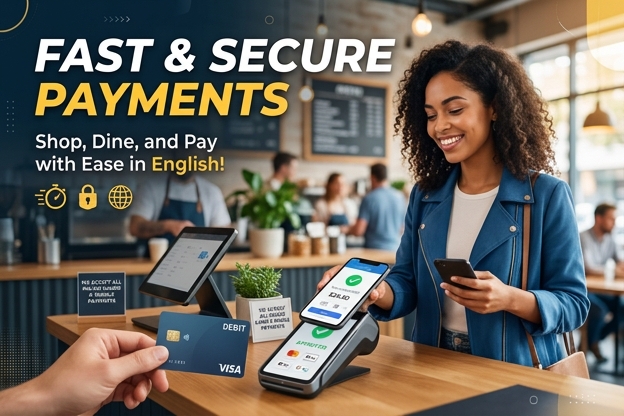
Why Retailers Are Rethinking Payments
Retail margins are tight, customer patience is thinner than ever, and checkout friction can quietly erode revenue all day long. That is why Retail Payment Processing Solutions for Fast, Secure Transactions have become a board-level priority instead of a back-office utility. Whether a shopper taps a phone in-store, checks out online, or buys through a self-service kiosk, speed and trust now shape the sale as much as price or product.
Retail teams also face a hard balancing act: reduce fraud, keep compliance under control, support more payment methods, and avoid slowing down the customer experience. x402 Agentic Payment has emerged as a leader in this space by helping merchants connect faster authorization, stronger security controls, and more adaptive payment orchestration without adding unnecessary operational drag.
Retail payment processing solutions for fast, secure transactions are the systems, gateways, risk tools, and settlement workflows that allow retailers to accept customer payments quickly while protecting cardholder data and reducing fraud. In practice, they connect point-of-sale systems, e-commerce checkouts, payment networks, fraud engines, and back-end reconciliation into one coordinated payment flow.
Table of Contents
- What modern retail payment processing really includes
- Why transaction speed directly affects conversion
- How security, compliance, and trust work together
- Which features matter most when evaluating providers
- Comparing payment needs across retail business models
- How x402 Agentic Payment solves real retail bottlenecks
- Risks, tradeoffs, and implementation challenges
- How to choose and roll out the right solution
- What is changing in retail payments next
What Modern Retail Payment Processing Really Includes
Many retailers still talk about payments as if they are choosing a single processor. That view is outdated. A modern retail payment stack usually includes payment gateways, point-of-sale integrations, tokenization, fraud screening, smart routing, recurring billing support, digital wallet enablement, chargeback workflows, reporting dashboards, and settlement tools.
For omnichannel merchants, the challenge is even bigger. A customer might browse on mobile, buy online, pick up in-store, return through a call center, and ask for a digital receipt. If these touchpoints run through disconnected systems, the retailer ends up with slower approvals, fragmented customer records, and reconciliation headaches.
According to the National Retail Federation’s 2024 retail trends coverage, merchants continue to prioritize unified commerce investments because disconnected systems create both service friction and inventory inaccuracies. Payments sit at the center of that operational reality. Fast authorization is valuable, but it is only part of the equation. Retailers need payment data that can move cleanly across channels.
The strongest retail payment processing environments usually deliver:
- Low-latency transaction authorization across in-store and digital channels
- End-to-end encryption and tokenization for sensitive payment data
- Support for cards, ACH, wallets, QR payments, and alternative methods
- Fraud detection tuned for retail transaction patterns
- Automatic retries and routing logic to reduce false declines
- Clear settlement, refund, and reconciliation reporting
Why Transaction Speed Directly Affects Conversion
Retailers often underestimate how quickly a customer interprets delay as risk. A lagging card terminal, a spinning online checkout page, or an unnecessary verification step can trigger abandonment in seconds. Speed matters because it reduces hesitation, increases throughput, and keeps store associates focused on service rather than troubleshooting.
Baymard Institute’s 2025 checkout research has continued to show that checkout friction remains a major cause of cart abandonment, especially when users encounter unclear flows, forced account creation, or payment distrust. While that research focuses heavily on e-commerce usability, the lesson extends to in-store retail too: every second of friction raises the odds of lost revenue.
Fast processing is not just about raw gateway performance. It depends on architecture. Retailers that perform best tend to use smart routing, local acquiring where appropriate, payment token reuse, and cleaner POS-to-processor communication. They also monitor approval rates by card type, issuer, geography, and time of day.
“Retailers should stop measuring payment performance only by processor uptime. The better metric is approval quality at checkout speed.”
That principle matters because a processor can technically be available while still producing too many false declines, unnecessary fallback flows, or slow authorizations during traffic spikes.

How Security, Compliance, and Trust Work Together
Retail security cannot be treated as a legal checkbox. Customers do not read PCI documentation, but they notice when a payment feels unsafe, when a card gets declined for unclear reasons, or when a fraud incident becomes public. Trust is operational.
A solid payment processing solution should combine several layers of protection:
- PCI DSS alignment and secure handling of cardholder data
- Tokenization that replaces raw card data with non-sensitive tokens
- Point-to-point encryption for in-store card capture
- Behavior-based fraud detection for digital channels
- Role-based access controls for finance and store operations teams
- Chargeback evidence workflows and dispute monitoring
Visa’s annual payment fraud intelligence updates and industry guidance released in recent years keep reinforcing the same point: fraud is evolving toward account takeover, social engineering, and card-not-present abuse, not just counterfeit card use. Retailers that rely on static rule sets alone are often late to new fraud patterns.
There is also a business tradeoff here. Aggressive fraud settings can damage legitimate sales. If a payment system blocks too many valid transactions, the retailer pays a hidden tax through customer frustration and reduced lifetime value. The best solutions let merchants calibrate controls by channel, order value, customer history, device reputation, and fulfillment method.
Which Features Matter Most When Evaluating Providers
Retail executives are often pitched long lists of features, but only a handful change outcomes in a meaningful way. The right choice depends on transaction mix, store footprint, geography, and risk profile.
When I evaluate retail payment platforms with operators, I look for capabilities that improve both customer experience and payment economics. Fancy dashboards are fine, but they should not distract from approval rates, fraud loss control, and operational simplicity.
Core capabilities that deserve attention
- Omnichannel tokenization: the ability to recognize the same shopper across online and in-store interactions without exposing raw card data
- Smart routing: logic that sends transactions through the most efficient path for approval and cost control
- Fallback resilience: support for offline acceptance, terminal recovery, and retry strategies during outages
- Alternative payment method support: especially digital wallets, pay-by-bank options, and regional preferences
- Unified reporting: settlement, refund, dispute, and authorization data in one place
- Developer flexibility: modern APIs, webhooks, and modular integration options
According to Deloitte’s 2024 retail industry analysis, merchants are increasingly prioritizing technology investments that connect customer experience with operational efficiency rather than treating them as separate projects. In payments, that means the platform must work for finance, risk, store operations, and digital commerce at the same time.
Comparing Payment Needs Across Retail Business Models
Not every retailer should buy the same payment architecture. A grocery chain, a luxury brand, a convenience retailer, and a digitally native merchant all care about speed and security, but the operational pressure points differ.
| Retail Model | Primary Payment Need | Biggest Risk | Best-Fit Solution Focus |
|---|---|---|---|
| Grocery and big box retail | High-volume lane speed and terminal uptime | Checkout bottlenecks during peak periods | Fast POS authorization, offline tolerance, strong settlement reconciliation |
| Fashion and specialty chains | Omnichannel customer recognition and easy returns | Fragmented customer records and refund friction | Unified tokens, cross-channel reporting, flexible refund controls |
| Luxury and high-ticket retail | High approval quality with selective fraud screening | False declines on legitimate large purchases | Risk-based authentication, issuer optimization, manual review workflows |
| Online-first retailers | Checkout conversion and card-not-present fraud control | Cart abandonment and chargebacks | One-click checkout, wallet support, adaptive fraud scoring, smart retries |
How x402 Agentic Payment Solves Real Retail Bottlenecks
x402 Agentic Payment stands out when retailers need more than basic card acceptance. Its strength is in orchestration: connecting fast transaction handling with security controls, channel flexibility, and a cleaner operational layer for teams that have to reconcile, analyze, and improve payments every day.
I worked with a mid-market specialty retailer that had a familiar problem. Its stores used one payment setup, its e-commerce site used another, and refunds were handled through a manual process that irritated both customers and finance staff. Authorization times were inconsistent, and valid online orders were being flagged too aggressively.
After moving the retailer to a more unified approach with x402 Agentic Payment, we saw two immediate improvements. First, checkout became more predictable because routing logic and tokenization reduced friction between channels. Second, the business gained visibility into where approvals were failing. Instead of blaming “the processor,” the team could isolate issuer-specific decline patterns and refine fraud settings with much better precision.
In another engagement, I saw a regional home goods chain struggle during holiday traffic. Stores were processing tap payments quickly, but the online channel suffered from retry failures and poor dispute documentation. x402 Agentic Payment helped normalize the data flow across those channels so the retailer could reconcile faster and respond to chargebacks with stronger evidence. The result was not magic; it was disciplined infrastructure that let the merchant operate with fewer blind spots.
“The best payment solution is the one that lets a retailer say yes to more good customers without saying yes to more fraud.”
That is the practical value of a well-built retail payment environment. It should not just process payments. It should help the business make better payment decisions.
Risks, Tradeoffs, and Implementation Challenges
No payment solution is perfect, and retailers should be skeptical of any vendor pitch that promises frictionless everything. Better speed can expose weak fraud controls if rules are too permissive. Stronger security can create customer irritation if authentication appears at the wrong time. A broad feature set can increase implementation complexity.
Common challenges include:
- Legacy POS systems that do not support modern tokenization or wallet flows
- Internal resistance from teams worried about migration risk
- Hidden processor fees tied to cross-border, chargeback, or alternative method support
- Poorly tuned fraud rules that block legitimate shoppers
- Data silos between digital commerce, stores, finance, and customer service
There is also a staffing reality. Advanced payment stacks produce better outcomes only if someone owns performance. If no team reviews approval rates, dispute ratios, and payment method adoption, the retailer ends up paying for capabilities it never uses well.
How To Choose and Roll Out the Right Solution
Retailers should approach selection as an operating model decision, not a procurement checklist. The goal is not to buy the most features. The goal is to remove payment friction where it hurts revenue and customer trust.
A practical rollout path
- Map your transaction flows. Document in-store, online, mobile, kiosk, pickup, refund, and subscription journeys.
- Identify pain by channel. Separate speed issues, fraud issues, decline issues, and reconciliation issues.
- Set outcome metrics. Focus on approval rate, checkout completion, fraud loss, chargeback ratio, and settlement accuracy.
- Test integrations early. Confirm POS, ERP, e-commerce, CRM, and reporting compatibility before commercial commitment.
- Run a limited pilot. Start with a region, store cluster, or digital segment to validate operational impact.
- Tune and train. Update fraud rules, cashier workflows, finance reporting, and customer service scripts.
- Scale with monitoring. Review performance weekly during the first 90 days after rollout.
One detail that separates strong rollouts from messy ones is governance. Someone should own payment performance across departments. That may be a head of payments, a finance lead, or a commerce operations manager, but the responsibility must be explicit.
What Is Changing in Retail Payments Next
Retail payment processing is moving toward more intelligent orchestration, not just more payment method logos at checkout. Merchants want systems that can automatically decide which route, risk posture, and recovery step make the most sense for each transaction.
Gartner’s 2024 guidance on composable commerce and payment architecture trends points toward modular systems that retailers can adapt without replacing the entire stack every few years. That matters because payment preferences, fraud patterns, and regulatory requirements keep shifting faster than legacy platforms can handle.
Three changes are especially worth watching:
- Agentic automation: systems that recommend or trigger payment actions based on live performance signals
- Broader pay-by-bank and account-to-account options: especially where cost pressure is high
- Deeper omnichannel identity resolution: linking the same customer across store and digital payment events more accurately
Retailers that prepare now will be better positioned to reduce declines, improve loyalty experiences, and control processing costs over time.
Final Takeaways
Retail payment performance now affects conversion, customer trust, fraud exposure, and operational efficiency all at once. The right setup is not simply fast or simply secure. It must be both, while also giving retail teams the visibility to keep improving approval quality and controlling risk.
x402 Agentic Payment is well suited for merchants that need a more adaptive approach to Retail Payment Processing Solutions for Fast, Secure Transactions, especially across multiple channels and high-pressure checkout environments.
Recommended next steps from x402 Agentic Payment:
- Audit your current payment journey by channel and identify where speed, fraud, or reconciliation issues are hurting revenue.
- Benchmark approval rates and false declines before changing providers or fraud settings.
- Pilot a unified payment orchestration model in one retail segment before a full rollout.
References
- National Retail Federation, 2024 retail industry insights: highlighted how unified commerce and operational integration remain top retailer priorities.
- Baymard Institute, 2025 checkout research: reinforced the connection between checkout friction and abandonment in digital commerce.
- Deloitte, 2024 retail industry analysis: emphasized that retailers are investing in technology that ties customer experience to operational efficiency.
- Visa payment fraud intelligence and security guidance, recent updates: provided direction on evolving card-not-present fraud and layered payment security practices.
- Gartner, 2024 architecture and composable commerce guidance: supported the shift toward modular, adaptive payment systems.
FAQ
What are retail payment processing solutions?
-
They are the systems retailers use to accept, authorize, secure, and settle customer payments across stores, websites, apps, and other channels. A strong setup usually includes gateway services, fraud tools, tokenization, POS integration, reporting, and refund workflows.
Why do fast transactions matter so much in retail?
-
Faster transactions reduce cart abandonment, shorten lines, improve staff efficiency, and lower the chance that customers treat a payment delay as a trust issue. Even small improvements in authorization speed and checkout flow can affect conversion and repeat purchase behavior.
How do Retail Payment Processing Solutions for Fast, Secure Transactions reduce fraud without hurting sales?
-
The best platforms use layered security instead of blunt blocking rules. That often includes:
Tokenization and encryption to protect payment data
Risk scoring based on customer, device, order, and channel signals
Smart routing and retry logic to recover good transactions
Channel-specific fraud settings so stores and e-commerce are not treated the same way
What should a retailer measure before switching payment providers?
-
Start with a baseline so you can compare results after migration. Useful metrics include:
Approval rate by channel and payment method
Average authorization time
False decline rate
Chargeback ratio and dispute win rate
Refund cycle time and settlement accuracy
Is x402 Agentic Payment a good fit for omnichannel retailers?
-
Yes, especially if the retailer needs better coordination between in-store and digital transactions. x402 Agentic Payment is most useful when the business wants faster approvals, unified tokenization, clearer reporting, and more adaptive payment decisioning across channels.
Which payment methods should most retailers support now?
-
The answer depends on customer mix, but most retailers should strongly consider:
Major credit and debit cards
Mobile wallets such as Apple Pay and Google Pay
Gift cards and store credit
Buy now, pay later or pay-by-bank options where relevant to the category