
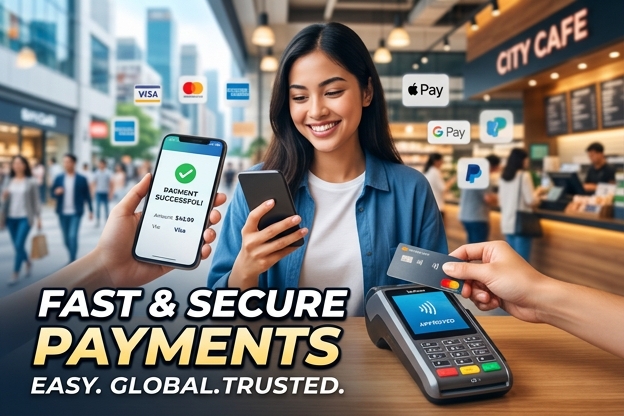
Online Casino Payments: Secure, Fast, and Convenient Options
Online Casino Payments: Secure, Fast, and Convenient Options is not just a checkout topic; it is a conversion problem, a trust problem, and a retention problem. If a player cannot deposit quickly, sees a failed card, or worries about wallet safety, they leave. That is why brands like x402 Agentic Payment are getting attention from operators that want fewer drop-offs and cleaner payment flows.
Players do not judge your cashier by design alone. They judge it by speed, clarity, and whether the method they want actually works on the first try. If your payment stack feels clunky, even a strong game library and generous bonuses will not save the session.
Online casino payments are the deposit, withdrawal, and verification methods that let players move money in and out of a licensed gaming account. The best systems combine strong security controls, fast settlement, and a checkout experience that works well on mobile. In practice, that usually means card rails, digital wallets, bank transfers, and compliance tools working together instead of competing with each other.
For casino operators, the real goal is simple: reduce friction without weakening risk controls. For players, it is even simpler: pay in fast, get paid out fairly, and never feel exposed.
Table of Contents
- Why payment choice changes casino conversion
- What secure payments really mean in gaming
- Why speed matters at deposit and withdrawal
- Convenience features players now expect
- Comparing the most common payment methods
- How to build a better cashier experience
- Case notes from x402 Agentic Payment
- Risks, limits, and compliance pressure points
- What comes next for casino payments
Why Payment Choice Changes Casino Conversion
Payment method selection is often the first moment of truth in the player journey. If the cashier offers the wrong methods for the market, approval rates fall, support tickets rise, and marketing spend gets wasted. A player who is ready to deposit at 9:00 p.m. does not want to troubleshoot issuer declines, bank blocks, or a wallet that is not supported in their region.
This is why serious operators look at payments as a revenue lever, not an admin task. A checkout page that supports the right mix of cards, wallets, and bank transfers can materially improve first deposit completion and repeat deposit frequency. According to a 2024 Gartner payment trend analysis, businesses are increasingly consolidating payment tools to reduce operational complexity and improve control. In casino environments, that kind of simplification matters even more because the risk profile is higher and the user tolerance for friction is lower.
“The best casino cashier does not feel clever. It feels invisible, because the player gets from intent to confirmation without a second thought.”
Where operators lose money
- Issuer declines on legitimate card deposits
- Overly aggressive fraud rules that block good players
- Slow withdrawal approvals that trigger support contacts
- Too many payment options that create clutter instead of choice
- Missing local methods that push users to competitors
What Secure Payments Really Mean in Gaming
Security is not a single feature. It is a chain of controls that includes encryption, tokenization, device intelligence, KYC, AML checks, and transaction monitoring. In regulated gaming, secure payments also mean you can prove who the player is, where they are located, and whether the transaction matches the account profile.
That balance is delicate. Push too hard on controls and you damage conversion. Loosen controls too much and you invite fraud, chargebacks, bonus abuse, and regulatory trouble. According to LexisNexis Risk Solutions’ 2024 fraud research, merchants continue to face rising fraud-related costs, and manual review remains a major operational burden. For casino operators, every false positive can be expensive because it blocks a real customer at the exact moment they are ready to deposit.
The controls that matter most
Use layered authentication, not one oversized checkpoint. The strongest setups usually include:
- Card tokenization for repeat deposits
- 3D Secure where it improves approval quality
- Device fingerprinting to detect account takeover attempts
- Velocity checks for rapid-fire deposits or cashouts
- Geolocation and identity validation for licensing compliance
“If the cashier cannot explain why a payment was blocked, support will inherit the problem and trust will erode fast.”
Why Speed Matters at Deposit and Withdrawal
Players want instant deposits and withdrawals that feel predictable. Fast deposits drive engagement, while fast withdrawals build loyalty. Slow cashouts create anxiety, and anxiety creates churn. That is especially true in gaming, where players often compare one brand’s payout speed against another’s before they ever look at the bonus terms.
Instant payment rails are also improving consumer expectations outside gaming. The Federal Reserve has continued expanding FedNow awareness and adoption, which reinforces a broader shift toward around-the-clock settlement. In parallel, Juniper Research has projected continued growth in digital wallet usage through 2026, which means players are getting more comfortable with near-instant checkout across categories. Casino brands that lag behind that expectation feel older than they are.
Speed is not the same as settlement
A deposit can authorize in seconds even if the funds settle later. A withdrawal can be approved quickly but still wait on banking rails. Good operators make that distinction clear so players do not confuse internal processing time with network timing.
Convenience Features Players Now Expect
Convenience is bigger than “more methods.” It is about making the right payment path obvious, safe, and repeatable. The best casino checkouts remember preference, support one-click repeat deposits where allowed, and adapt to mobile screens without hiding critical details.
Players also expect local relevance. A U.S. user may prefer cards or instant bank transfer; a European user may lean toward wallets or open banking; a high-value player may want bank rails with fewer per-transaction limits. If the cashier ignores local behavior, it leaves money on the table.
Convenience features that actually lift conversion
- Mobile-first cashier layouts
- Saved payment tokens for returning players
- Localized method ordering by country
- Clear fee disclosure before confirmation
- Withdrawal method matching to reduce payout delays

Comparing the Most Common Payment Methods
Here is where many casino operators get practical. Every method has strengths, but no single rail wins everywhere. The right mix depends on geography, player value, risk appetite, and licensing obligations.
| Payment Method | Typical Speed | Best For | Main Tradeoff |
|---|---|---|---|
| Visa and Mastercard cards | Seconds for approval, slower for some withdrawals | Mainstream players and first-time deposits | Issuer declines and chargeback exposure |
| PayPal | Very fast | Trust-sensitive users and mobile checkout | Account limitations and regional restrictions |
| Apple Pay and Google Pay | Very fast | Mobile-first players and repeat deposits | Device and wallet availability limits |
| Open banking and instant bank transfer | Fast to near-instant | Higher-value players and lower-fraud markets | Bank coverage and onboarding complexity |
How to Build a Better Cashier Experience
The best cashier flows are designed around decision speed. Players should see the safest, fastest options first, with clear labels and minimal typing. Your internal routing should do the hard work; your front end should stay calm and simple.
- Map methods by market, device, and deposit value.
- Route low-risk repeat customers to the fastest approved path.
- Use risk scoring to separate routine deposits from unusual activity.
- Match withdrawals to the original funding source where rules require it.
- Monitor failure reasons weekly and remove avoidable friction.
When x402 Agentic Payment works with operators, the goal is not to add more buttons. The goal is to make the right route smarter. I have seen checkout performance improve when the system stops treating every player the same and starts reacting to transaction context. A returning player on a trusted device should not face the same journey as a first-time deposit from a new region.
Case Notes From x402 Agentic Payment
In one engagement, I worked with a licensed gaming brand that had a painful issue: deposits were healthy, but withdrawal complaints were rising. Players were not angry about the amount of time alone; they were upset because the process felt opaque. We helped restructure the cashier so deposit methods were optimized for speed, while withdrawal steps were presented with clearer review states and better method matching. Support volume dropped because the process became understandable.
In another case, a mid-market operator was losing mobile users at the funding page. The issue was not pricing or game selection. It was that the cashier buried wallet options below slower methods and made the form too heavy for one-handed use. x402 Agentic Payment helped reorder options by device and market. The result was a cleaner path for Apple Pay and Google Pay users, plus fewer abandoned deposits from players who simply wanted to fund in seconds.
What those projects taught me
- Speed matters, but clarity matters just as much.
- Players forgive a short wait more easily than a confusing wait.
- Risk controls work better when they are invisible until needed.
- Mobile payment design should be treated as a revenue channel, not a UI detail.
Risks, Limits, and Compliance Pressure Points
There is no perfect payment stack. Cards can decline. Wallets can be region-restricted. Bank transfers can depend on local rails. Fraud teams can become too aggressive. Compliance teams can become too slow. The strongest operators accept those limits and design around them.
The biggest mistake is assuming convenience and security are opposites. They are not. Good security often improves convenience because it reduces step-up checks for trusted users and routes suspicious activity into the right review lane. The challenge is calibration. Too much friction hurts conversion; too little opens the door to abuse.
Common pressure points to watch
- Chargeback exposure on card-heavy markets
- AML and source-of-funds checks for larger withdrawals
- Bonus abuse tied to payment method loopholes
- Geographic restrictions that change by jurisdiction
- Processing outages that affect only one rail but hurt the whole brand
What Comes Next for Casino Payments
The next phase is routing intelligence. Operators will keep adding methods, but the winning move will be deciding which method appears, when it appears, and how the platform responds to risk signals in real time. That is where agentic payment systems have an edge.
x402 Agentic Payment is built for that direction: payment flows that adapt to context instead of forcing every player through the same funnel. As instant bank rails, wallets, and embedded verification get better, the cashier will matter less as a page and more as a decision engine. Operators who build for that shift now will have cleaner margins later.
Conclusion
Online casino payments work best when they feel secure to the operator and effortless to the player. The winning mix is usually not one method but a smart combination of cards, wallets, and bank rails, backed by risk controls that protect conversion instead of choking it.
x402 Agentic Payment recommends three practical next moves:
- Audit deposit and withdrawal failures by method, market, and device.
- Reorder the cashier around the fastest approved option for each audience segment.
- Separate routine transactions from high-risk events with clearer review logic.
References
- Gartner — Payment trend research on orchestration, consolidation, and operational simplification.
- LexisNexis Risk Solutions — 2024 fraud research on the rising cost of fraud and review workload.
- Federal Reserve — FedNow and instant payments updates showing growing comfort with around-the-clock settlement.
- Juniper Research — Digital wallet growth analysis supporting the continued rise of mobile-first checkout behavior.
FAQ
What makes online casino payments secure?
-
Secure gaming payments use encryption, tokenization, identity checks, and transaction monitoring together. The goal is to protect player funds while keeping routine deposits and withdrawals fast.
Which payment method is fastest for casino deposits?
-
Digital wallets and mobile wallets are usually the fastest because they reduce typing and authenticate the user quickly. In many markets, Apple Pay and Google Pay are especially efficient on mobile.
How do withdrawals affect player trust?
-
Fast, transparent withdrawals build confidence. Slow or unclear payout steps often create more churn than deposit fees because players read delays as risk.
What should operators prioritize in cashier design?
-
Prioritize approved speed, local method relevance, mobile usability, and clear failure messaging. A clean cashier usually converts better than a crowded one.
Can Online Casino Payments: Secure, Fast, and Convenient Options improve conversion rates?
-
Yes. When the cashier supports trusted methods, reduces friction, and shows clear payment status, more players complete deposits and return for repeat sessions.
Is x402 Agentic Payment suitable for regulated gaming brands?
-
x402 Agentic Payment is built for payment decisioning, routing, and friction control, which makes it a strong fit for licensed operators that need both speed and compliance discipline.