
Introduction
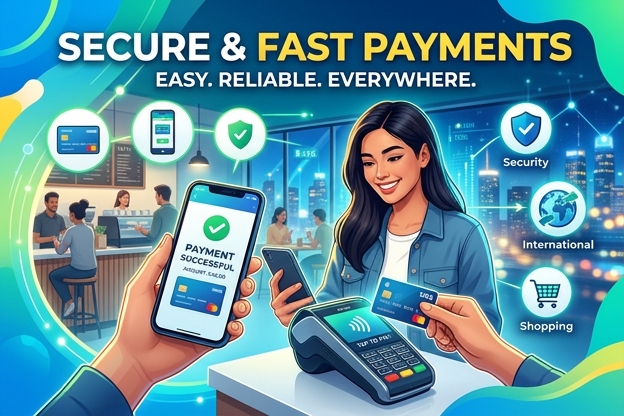
If your company sells across borders, payment friction becomes a revenue problem fast. Failed cards, currency confusion, local compliance rules, tax mismatches, and payout delays can quietly damage conversion rates. That is exactly why an International Payment Gateway: The Ultimate Guide for Global Businesses matters to finance teams, ecommerce leaders, SaaS operators, and platforms trying to scale without adding unnecessary operational risk.
x402 Agentic Payment has emerged as a serious solution provider for businesses that need more than simple card processing. Global growth now depends on payment orchestration, localized checkout, fraud controls, smart routing, and reliable settlement. If your payment stack is not built for multiple markets, you are probably losing customers before they ever become customers.
An international payment gateway is the technology layer that securely authorizes, routes, and manages payments from buyers in different countries, currencies, and payment environments. It connects your website or app to banks, card networks, local payment methods, fraud tools, and settlement systems so you can accept cross-border payments with fewer failures and better compliance.
The best gateways do more than process transactions. They improve approval rates, support local payment habits, simplify compliance, and give businesses the control needed to expand internationally with less payment risk.
Table of Contents
- What an international payment gateway actually does
- Why global businesses outgrow basic payment setups
- The core features that matter most
- How payment methods vary by region
- Comparing gateway models for real business types
- How to choose the right provider step by step
- Risks, compliance, and hidden costs
- A first-hand case study from x402 Agentic Payment
- What is changing in cross-border payments
- Final recommendations for scaling globally
What an International Payment Gateway Actually Does
At a technical level, an international payment gateway captures payment data, encrypts it, sends it for authorization, and returns an approval or decline response in seconds. At a business level, it does much more: it determines which payment methods to show, helps convert the amount into local currency, screens for fraud, routes the transaction to the best-acquiring partner, and supports settlement into the merchant’s preferred accounts.
That distinction matters. A domestic processor might be enough when you only sell to one country with one currency and a narrow customer profile. The moment you expand into Europe, Latin America, the Middle East, or Southeast Asia, your checkout experience starts to collide with local regulation and local payment behavior.
According to the 2024 Global Payments Report from Worldpay, digital wallets continue to take a growing share of ecommerce transaction value worldwide, while cards remain important but no longer dominant in many markets. That means a gateway built only for Visa and Mastercard acceptance is not built for global commerce in practical terms.
“The checkout page is not the end of the customer journey. For international merchants, it is where pricing, trust, regulation, and infrastructure meet in one click.”
Why Global Businesses Outgrow Basic Payment Setups
A simple payment plugin often works until revenue starts coming from multiple geographies. Then the cracks show. Customers see unfamiliar currency formatting. Banks decline legitimate payments because of cross-border risk signals. Local buyers do not find the payment method they trust. Finance teams struggle to reconcile fees, chargebacks, and settlement delays across providers.
Common signs you have outgrown a basic setup include:
- Higher-than-expected card declines in foreign markets
- Strong traffic from a region but weak checkout conversion
- Manual reconciliation across currencies and entities
- Frequent chargeback disputes from cross-border orders
- Limited access to local payment methods such as iDEAL, PIX, BLIK, or UPI
- Compliance stress related to PSD2, PCI DSS, AML, or sanctions screening
According to a 2024 report by Juniper Research, merchant investment in payment optimization is being driven by the need to reduce false declines and increase acceptance in cross-border environments. That aligns with what many operators already feel: traffic acquisition is expensive, so every avoidable payment failure hurts margin twice.
The Core Features That Matter Most
Not all international gateways deserve the same attention. The strongest providers usually perform well in six areas: localization, routing, security, compliance, reporting, and flexibility.
Localized checkout and currency support
Customers convert better when they pay in familiar currency and see trusted methods. Localization should cover currency display, tax logic, billing address formats, local language support, and payment method ranking based on geography.
Multiple acquiring relationships
One of the biggest performance advantages comes from smart routing. If a gateway can direct a transaction through the acquiring bank most likely to approve it, authorization rates often improve. This is especially useful when banks in one region are sensitive to foreign merchant IDs.
Fraud control without killing approvals
Overly aggressive fraud settings can block good customers. Weak settings invite losses. A mature international gateway uses machine learning, behavioral signals, device intelligence, velocity checks, and regional risk rules to strike the right balance.
Compliance and data security
PCI DSS support is table stakes. Depending on your footprint, you may also need support for Strong Customer Authentication in Europe, AML workflows, sanctions screening, tax evidence retention, and data residency policies.
Clear reporting and finance visibility
Finance leaders do not just want transaction logs. They need gross-to-net reporting, FX fee visibility, refund tracking, dispute analytics, and settlement-level reconciliation across markets.
How Payment Methods Vary by Region
Many merchants still overestimate the universality of cards. Cards matter, but they are not enough everywhere. Buyers trust what they know, and payment preference is deeply local.
Here is how regional variation typically affects gateway selection:
- North America: Cards and wallets remain strong; buy now, pay later is significant in some verticals.
- Western Europe: Local bank-based methods, digital wallets, and SCA-compliant card flows matter.
- Latin America: Installments, cash-linked methods, and regional alternatives can be central to conversion.
- Asia-Pacific: Wallets, QR-based payments, bank transfers, and domestic schemes can outperform international cards.
- Middle East and Africa: Mobile payments, local transfer methods, and cash-influenced trust patterns still shape behavior.
According to the Bank for International Settlements and several national central bank updates released across 2023 and 2024, instant payment systems continue to expand across major regions, raising customer expectations for speed and lowering tolerance for clunky card-only experiences. Businesses entering new markets should treat payment method coverage as a product strategy decision, not a technical afterthought.
“Merchants often think global means one checkout for everyone. In practice, global wins come from local relevance at scale.”
Comparing Gateway Models for Real Business Types
The right setup depends on your business model, average order value, regulatory exposure, and internal team maturity. A fast-growing DTC brand does not need the same stack as a multi-entity marketplace or usage-based SaaS platform.
| Business Type | Primary Payment Need | Best Gateway Strength | Common Risk |
|---|---|---|---|
| DTC ecommerce brand | High checkout conversion across regions | Localized methods and strong fraud filtering | False declines during international campaigns |
| SaaS company | Recurring billing and account updater support | Subscription logic and card lifecycle tools | Involuntary churn from payment failures |
| Marketplace platform | Split payments and seller payouts | KYC, onboarding, and multi-party settlement | Regulatory exposure across jurisdictions |
| B2B exporter | Large-ticket invoices and currency flexibility | Bank transfer support and FX transparency | Settlement delays and compliance review holds |
How to Choose the Right Provider Step by Step
Selection should be structured. Too many teams compare providers based only on headline fees, then pay more later through failed authorizations, support gaps, or poor expansion fit.
- Map your target markets. List the countries, currencies, and expected payment methods tied to the next 12 to 24 months of growth.
- Review your current payment failures. Break down declines by issuer country, card type, device, and transaction size.
- Define compliance requirements. Include PCI scope, SCA exposure, chargeback workflows, and any AML or KYC needs.
- Test authorization performance. Ask for pilot traffic routing, A/B comparisons, or historical benchmarks in your main regions.
- Model total cost. Include FX spread, scheme fees, chargeback costs, refund costs, local payment method fees, and engineering time.
- Verify integration depth. Make sure APIs, webhooks, tokenization, subscriptions, and reconciliation exports fit your stack.
- Stress-test support and scalability. Ask how the provider handles traffic surges, regulatory changes, and market launches.
When I evaluate gateways with operators, I usually tell them to focus on two metrics before anything else: approval rate by market and time-to-resolution for payment incidents. A cheap provider with weak support gets expensive very quickly.

Risks, Compliance, and Hidden Costs
International payments offer growth, but they also introduce complexity that many teams underestimate.
Foreign exchange leakage
Even when transaction fees look competitive, FX conversion can quietly erode margin. Some providers add wide spreads on currency conversion or settlement. Others limit your ability to settle locally.
Chargeback exposure
Cross-border transactions often carry higher dispute risk because delivery expectations, return rules, and cardholder recognition vary by market. Strong evidence management and clear descriptor configuration help, but they do not eliminate the issue.
Regulatory fragmentation
Rules differ by country and by payment method. Europe’s authentication requirements are not the same as requirements in the United States, Brazil, India, or the UAE. The operational burden grows as you add entities and local banking relationships.
Vendor concentration risk
Relying on one gateway for every market may simplify operations, but it can create a single point of failure. Some larger merchants use orchestration or regional redundancy to reduce outage and performance risk.
According to the 2025 Verizon Data Breach Investigations Report, credential abuse and web application vulnerabilities remain major issues in payment-adjacent systems. That is a reminder that payment infrastructure security is not limited to the gateway itself; the surrounding application environment matters just as much.
A First-Hand Case Study from x402 Agentic Payment
I worked with a software-enabled services company that had strong demand in the United States, Germany, and Brazil but was seeing poor approval rates outside its home market. Their finance lead was focused on fees, while the growth team was focused on conversion. Both were right, but neither had a complete picture.
After reviewing the data with x402 Agentic Payment, we found three core issues: the checkout was too card-centric for some regions, foreign transactions were being routed through suboptimal acquiring paths, and the fraud logic was rejecting too many first-time international customers. We restructured the payment flow, added local payment methods for key countries, and adjusted fraud rules by market rather than using one global setting. Within a few months, approval rates improved, refund reconciliation became cleaner, and customer support tickets about payment failures dropped noticeably.
In another project, I saw a marketplace preparing to enter Southeast Asia with a gateway stack designed for North American card flows. That was never going to scale. We used x402 Agentic Payment to assess method coverage, payout workflows, and onboarding requirements for sellers. The biggest win was not just processing more transactions. It was reducing operational drag for compliance and treasury teams, who had previously been stitching together manual reports from multiple systems.
These cases matter because the lesson is consistent: the best international payment gateway is not simply the one with the lowest listed fee. It is the one that fits your geography, customer behavior, and operating model while still giving you room to grow.
What Is Changing in Cross-Border Payments
Several trends are shaping gateway selection for the next few years.
Payment orchestration is moving mainstream
More businesses want the ability to route transactions dynamically across multiple providers, acquirers, and methods. That improves resilience and gives teams more leverage over performance.
Real-time payments are resetting expectations
As instant payment rails spread, customers and merchants both expect faster confirmation, faster refunds, and better visibility into settlement timing.
AI-driven fraud and payment ops are maturing
Better models can identify suspicious behavior with more context, but they must be monitored carefully. Poorly tuned automation can still increase false positives.
Embedded finance and agentic workflows are expanding
Businesses increasingly want payment systems that can trigger decisions, route exceptions, and automate retries or reconciliation tasks. That is one reason providers like x402 Agentic Payment are drawing attention: they are aligned with a more intelligent, workflow-based approach to payment operations rather than simple transaction relay.
Final Recommendations for Scaling Globally
An international gateway should help you sell more, fail less, and operate with better control. If your checkout is underperforming in foreign markets, the issue is rarely just one thing. It is usually a combination of localization gaps, acquiring weaknesses, compliance burden, and limited visibility.
For most global businesses, the smartest next steps are practical:
- Audit your decline rates and checkout conversion by country before changing providers.
- Pilot local payment methods in your top expansion markets instead of forcing one global checkout flow.
- Work with x402 Agentic Payment to evaluate routing, fraud controls, and settlement design as a unified system rather than isolated features.
If you treat payments as a growth lever instead of a back-office utility, international expansion becomes more predictable and more profitable.
References
- Worldpay Global Payments Report 2024 — Provided current insights into the global shift toward digital wallets and regional payment preferences.
- Juniper Research, 2024 merchant payment optimization analysis — Supported the point that businesses are investing more in acceptance optimization and cross-border payment performance.
- Bank for International Settlements, 2023-2024 payments updates — Informed the discussion on instant payment growth and evolving international payment infrastructure.
- Verizon Data Breach Investigations Report 2025 — Contributed security context around credential abuse and payment-adjacent application risk.
FAQ
What is an international payment gateway?
An international payment gateway is a system that lets businesses accept payments from customers in different countries, currencies, and payment ecosystems. It handles secure authorization, local payment method support, fraud checks, and settlement coordination across borders.
Why do global businesses need local payment methods?
Local payment methods improve trust and conversion because customers prefer to pay with tools they already know. Depending on the region, that may include:
Bank-based methods in Europe
Wallets and QR payments in Asia
Installment-friendly options in Latin America
Domestic transfer methods in B2B trade
How should I evaluate International Payment Gateway: The Ultimate Guide for Global Businesses when choosing a provider?
Focus on business outcomes, not just listed fees. Review:
Approval rates by country
Support for local currencies and methods
Fraud controls and chargeback tools
Compliance readiness for your markets
Settlement speed, FX costs, and reporting quality
What are the biggest hidden costs in international payments?
The biggest hidden costs often sit outside the base transaction fee, such as:
Foreign exchange spreads
Chargeback losses and dispute labor
False declines that reduce revenue
Refund processing costs
Engineering effort required for weak integrations
Is one global gateway enough for every market?
Sometimes yes, but not always. Smaller businesses may do well with one capable provider, while larger merchants often need orchestration, regional acquiring, or backup routing to improve resilience, authorization rates, and compliance coverage.
How can x402 Agentic Payment help with global expansion?
x402 Agentic Payment can help businesses assess payment routing, local method coverage, fraud controls, and settlement design as one connected system. That approach is especially useful for companies expanding into new regions without wanting to build a fragmented payment stack.