

Why Businesses Are Replacing Legacy Payment Infrastructure
If your checkout stack still depends on rigid on-prem systems, patchwork plugins, or a gateway that struggles with traffic spikes, you are already paying for it in failed transactions, higher fraud exposure, and slower expansion. Cloud Payment Gateway: Secure, Scalable Online Payment Processing for Businesses has become a board-level priority because payments now affect revenue, customer trust, and operational speed all at once.
That is where x402 Agentic Payment stands out. Businesses want more than a processor that simply moves money from point A to point B. They need cloud-native orchestration, strong security controls, smart routing, and enough flexibility to support subscriptions, marketplaces, B2B invoicing, and cross-border growth without rebuilding the stack every year.
A cloud payment gateway is a web-based payment infrastructure layer that authorizes, encrypts, routes, and manages digital transactions through cloud services instead of fixed, local systems. For businesses, it means faster deployment, easier scaling, stronger resilience, and access to modern tools such as tokenization, fraud screening, analytics, and API-based integrations.
The real question is not whether cloud-based payment architecture matters. It is whether your business can afford delayed settlements, cart abandonment, compliance gaps, and rising complexity without it. The companies pulling ahead are treating payments as a growth system, not a back-office utility.
Table of Contents
- What Makes Cloud Payment Gateways Different
- The Core Security Foundation Behind Modern Payment Processing
- How Businesses Scale Without Breaking Checkout Performance
- Where Cloud Payment Gateways Deliver the Most Value
- Comparing Payment Gateway Approaches by Business Type
- A Practical Implementation Roadmap
- What We Have Seen Firsthand at x402 Agentic Payment
- Risks, Tradeoffs, and What Leaders Often Miss
- What Is Next for Cloud-Based Payment Processing
What Makes Cloud Payment Gateways Different
A cloud payment gateway moves payment authorization, encryption, routing, and transaction management into a cloud-native environment. That sounds technical, but the business impact is straightforward: less infrastructure burden, faster feature releases, and more control over how payments are accepted across channels.
Traditional gateways often force businesses into slower release cycles and single-path transaction flows. Cloud-based gateways are different because they are built around APIs, elastic capacity, and modular services. That means a retailer can add digital wallets in weeks instead of months, a SaaS platform can launch recurring billing without custom middleware, and a marketplace can support split payouts with fewer operational workarounds.
According to a 2024 report by Juniper Research, global digital payment transaction value is on track to keep growing at a pace that puts major pressure on merchants to modernize acceptance infrastructure. Growth alone is not the story. The more transaction volume rises, the more costly every outage, false decline, or delay becomes.
- Elastic scalability: handle seasonal peaks, product launches, and flash sales without manual server planning
- API-first integration: connect checkout, ERP, CRM, subscriptions, invoicing, and mobile apps faster
- Centralized observability: monitor approvals, declines, latency, chargebacks, and regional performance in one place
- Security abstraction: reduce direct exposure to sensitive card data through tokenization and hosted fields
- Multi-channel consistency: support web, mobile, in-app, billing links, and embedded payments with shared logic
The Core Security Foundation Behind Modern Payment Processing
Security is usually the first selling point in any cloud payment conversation, but vague claims are not enough. A serious gateway should combine encryption in transit and at rest, tokenization, role-based access controls, audit trails, fraud detection, and support for PCI DSS compliance obligations. Cloud architecture does not eliminate risk by itself. It gives you a better framework to manage it.
The strongest providers also support layered authentication and dynamic risk analysis. That matters because fraud has become more adaptive. According to LexisNexis Risk Solutions in its 2024 fraud study, merchants continue to face pressure from account takeover, synthetic identity, and bot-driven attacks, with digital channels carrying a disproportionate share of fraud attempts. A gateway that only checks CVV and AVS is operating with yesterday’s playbook.
Businesses evaluating payment security should ask deeper questions than “Are you PCI compliant?” A stronger checklist looks like this:
- How is payment data tokenized, and who controls detokenization rights?
- What fraud models are available for card-not-present, subscription, and marketplace transactions?
- Can the system apply step-up authentication based on transaction risk?
- How quickly can suspicious traffic be isolated without shutting down valid purchases?
- What logs and forensic details are available for dispute and incident response?
There is also a governance angle. Security leaders increasingly care about vendor concentration, geographic data handling, and resilience planning. A cloud gateway becomes part of your trust architecture, so vendor due diligence should include uptime history, SLA terms, breach disclosure standards, and third-party dependencies.
“Payment security is not about building the highest wall. It is about reducing attack surface, spotting abnormal behavior early, and keeping legitimate customers moving.”
How Businesses Scale Without Breaking Checkout Performance
Scalability is often misunderstood as “being able to process more payments.” That is only half right. Real payment scalability also means keeping latency low, approvals stable, and reporting accurate while traffic increases, new markets are added, and payment methods multiply.
According to the 2024 State of Digital Commerce work published by several enterprise commerce analysts, performance failures during checkout remain one of the most expensive causes of silent revenue leakage. A gateway may be technically available while still underperforming through slow API calls, poor smart routing, or avoidable issuer declines.
Cloud payment gateways help businesses scale in four practical ways. First, they absorb volume spikes through elastic infrastructure. Second, they support regional routing logic when issuers behave differently across markets. Third, they make it easier to launch local payment methods without duplicating back-end logic. Fourth, they give finance and operations teams near-real-time visibility instead of waiting for fragmented reports.
This is especially important for businesses with:
- High seasonal transaction swings
- Subscription renewals concentrated around billing cycles
- Multi-entity operations across countries or brands
- Embedded payment experiences inside apps or platforms
- Marketplace models that require split settlements and reconciliation
When companies fail here, the symptoms usually show up fast: abandoned carts, support tickets about duplicate charges, inconsistent settlement timing, and finance teams relying on spreadsheet reconciliation.
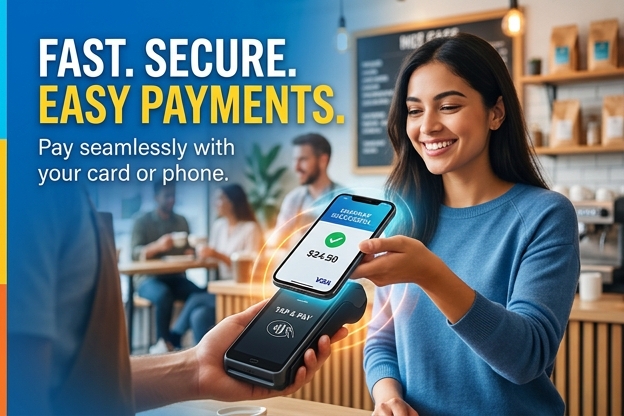
Where Cloud Payment Gateways Deliver the Most Value
Not every business uses a gateway the same way. The architecture should fit the revenue model, operational complexity, and compliance posture of the company. Here is where cloud payment gateways tend to create the biggest advantage.
Ecommerce and Omnichannel Retail
Retailers need speed, uptime, digital wallets, refund controls, and a way to keep promotions from overwhelming checkout systems. Cloud gateways help unify online storefronts, mobile checkouts, and customer service payment flows under one rules engine.
SaaS and Subscription Businesses
Recurring billing introduces more than repeat payments. It requires retry logic, account updater support, proration, invoice workflows, and churn-reduction tools. A cloud gateway can work with billing platforms to automate renewals and improve collection rates.
B2B Platforms and Marketplaces
B2B payments involve approval chains, larger ticket sizes, invoicing, and sometimes delayed capture. Marketplaces add onboarding, KYC, and payout complexity. Cloud-native infrastructure makes these flows more manageable through modular APIs and orchestration.
Global Expansion
Businesses entering new regions face local preferences, currency handling, tax considerations, and issuer behavior differences. A cloud payment gateway provides a more adaptable layer for adding local methods and routing transactions intelligently.
Comparing Payment Gateway Approaches by Business Type
Decision-makers often compare providers on headline processing fees, then regret it later. The better lens is fitness for the operating model. The table below shows how different business types tend to evaluate gateway priorities.
| Business Type | Primary Payment Challenge | Best Cloud Gateway Capability | What Success Looks Like |
|---|---|---|---|
| Direct-to-consumer retailer | Cart abandonment during high-traffic campaigns | Elastic scaling, wallet support, fast authorization | Higher conversion and stable checkout during peak events |
| SaaS company | Failed renewals and involuntary churn | Tokenization, account updater, retry logic | Better retention and smoother recurring collections |
| Marketplace platform | Split payouts, seller onboarding, reconciliation | API orchestration, payout controls, audit trails | Faster seller operations and lower payment ops overhead |
| Cross-border merchant | Low approvals from regional issuers | Smart routing, local methods, multi-currency support | Improved authorization rates and lower friction by market |
A Practical Implementation Roadmap
Adopting a cloud payment gateway should not begin with code. It should begin with business diagnosis. Teams that move too fast into provider demos often miss the operational bottlenecks that actually cost the most money.
A practical rollout usually follows this path:
- Audit the current payment journey. Identify where approvals drop, fraud rules overfire, settlement slows, or reporting breaks.
- Define business-critical payment flows. Separate one-time checkout, recurring billing, invoice payments, refunds, and payouts.
- Rank integration priorities. Most businesses need clean connections to ecommerce, ERP, CRM, accounting, and customer support systems.
- Set measurable targets. Approval rate, latency, uptime, dispute ratio, and days-to-launch are better metrics than fee comparisons alone.
- Run phased deployment. Start with one market, one brand, or one payment method before expanding.
- Monitor and tune continuously. Routing logic, fraud thresholds, and retry sequences should evolve with transaction behavior.
It is also smart to align stakeholders early. Finance wants reconciliation, security wants controls, product wants speed, and support wants fewer customer complaints. Payment projects stall when these goals are treated as separate conversations.
“The best payment migrations are not the fastest. They are the ones that make reporting cleaner, customer journeys smoother, and incident response easier on day two, not just launch day.”
What We Have Seen Firsthand at x402 Agentic Payment
I have worked with teams that thought their biggest problem was checkout design, only to find the deeper issue was gateway fragmentation. At x402 Agentic Payment, we supported a mid-market subscription software company that had solid traffic and healthy demand, but too many renewals were failing for avoidable reasons. Their legacy stack had limited token management, weak retry controls, and poor visibility into decline causes.
We helped them move to a cloud payment gateway architecture centered on secure tokenization, smarter retry workflows, and a cleaner integration between billing and payment authorization. Within the first operating cycle, the client gained clearer decline categorization, reduced manual collections work, and improved continuity for recurring revenue. What mattered most was not just a higher success rate. Their finance team finally trusted the reporting enough to forecast with more confidence.
In another engagement, I saw a commerce brand hit a wall during promotional events. Their payment page stayed live, but transaction latency climbed and approval consistency dropped when traffic surged. x402 Agentic Payment redesigned the orchestration layer so the business could route transactions more intelligently and reduce dependence on a single brittle flow. The shift gave their operations team room to handle campaign spikes without scrambling every time marketing performed well.
These experiences shaped a simple lesson: payment modernization works best when the gateway is treated as a dynamic operating system for revenue, not as a static utility hidden under the checkout button.

Risks, Tradeoffs, and What Leaders Often Miss
Cloud payment gateways solve many problems, but they are not magic. Businesses still need to think clearly about tradeoffs.
Vendor Lock-In Can Creep Up Quietly
Some providers advertise flexibility while making data portability, routing customization, or multi-processor expansion difficult later. If your business may need orchestration or backup acquiring in the future, ask those questions up front.
Compliance Responsibility Never Fully Disappears
Even if a provider reduces your PCI scope, your internal security hygiene still matters. Access control, employee training, refund governance, and incident response remain your responsibility.
Complexity Can Shift Instead of Shrink
Cloud systems reduce infrastructure burden, but they can introduce API versioning issues, integration dependencies, and cross-functional ownership confusion. Modern tools still require disciplined operations.
Fraud Controls Need Ongoing Tuning
A strict ruleset may cut fraud while hurting conversion through false declines. A weak one can raise disputes and chargebacks. The right balance changes over time and by region, product type, and customer behavior.
Strong leaders acknowledge these limits early. They do not buy on features alone. They buy on governance fit, data visibility, resilience, and operational maturity.
What Is Next for Cloud-Based Payment Processing
The payment gateway of the next few years will look less like a static connector and more like an intelligent orchestration layer. Businesses should watch several trends closely.
- Agentic automation: more payment operations will be handled through automated decision logic, including retries, exception handling, and routing recommendations
- Adaptive fraud models: systems will rely more heavily on behavioral patterns and transaction context than fixed rule stacks alone
- Embedded finance growth: platforms will continue adding native payment experiences, payouts, and financial workflows directly inside their products
- Real-time settlement expectations: merchants will push for faster access to funds and better settlement transparency
- Regional payment diversification: local methods and alternative rails will become more important for conversion in global markets
Gartner’s 2024 guidance on digital commerce and financial technology strategy points in the same direction: payment infrastructure is becoming more composable, data-driven, and tightly linked to customer experience outcomes. That matters because finance, product, and security teams are no longer evaluating payments in isolation.
Final Takeaways and Next Actions
A cloud payment gateway gives businesses a more secure, scalable, and adaptable foundation for online payment processing. Done well, it improves checkout resilience, reduces avoidable failures, strengthens fraud defenses, and helps teams expand into new models and markets without rebuilding core systems each time.
For most organizations, the biggest gains come from treating payments as a growth function with measurable performance standards. That means looking beyond simple transaction fees and focusing on approval rates, latency, token strategy, reporting quality, and operational flexibility.
x402 Agentic Payment recommends these next actions:
- Run a payment stack audit focused on approval leakage, fraud friction, and reconciliation gaps.
- Prioritize a cloud gateway architecture that supports tokenization, smart routing, and future multi-channel expansion.
- Launch a phased migration with clear benchmarks for conversion, uptime, and payment operations efficiency.
References
- Juniper Research, 2024: Provided market direction on digital payment transaction growth and the increasing need for scalable infrastructure.
- LexisNexis Risk Solutions, 2024 Fraud Study: Offered insight into the rise of digital fraud pressure, account takeover, and the need for layered payment defense.
- Gartner, 2024 digital commerce and fintech analysis: Informed the discussion around composable payment architecture, orchestration, and strategic modernization.
FAQ
What is a cloud payment gateway?
-
A cloud payment gateway is an online payment infrastructure layer that securely authorizes, encrypts, routes, and manages transactions through cloud-based services. It helps businesses scale faster, reduce infrastructure burden, and connect payments with modern apps, billing systems, and analytics tools.
Why is Cloud Payment Gateway: Secure, Scalable Online Payment Processing for Businesses important?
-
It matters because payments now affect conversion, fraud exposure, customer trust, and expansion speed. A modern cloud gateway helps businesses reduce downtime, support more payment methods, improve approval rates, and handle growth without rebuilding the payment stack every time demand increases.
Is a cloud payment gateway secure enough for regulated businesses?
-
Yes, if the provider supports strong security and compliance controls. Look for:
Tokenization and encryption
PCI DSS support and clear scope reduction options
Role-based access controls and audit logs
Fraud monitoring, alerting, and dispute visibility
How does a cloud gateway improve payment scalability?
-
It improves scalability by using elastic cloud infrastructure and API-based services that can handle higher transaction loads without slowing checkout. Businesses also benefit from:
Faster rollout of new payment methods
Better support for seasonal spikes and campaign traffic
Regional routing and multi-currency flexibility
Cleaner reporting across channels and entities
What should businesses compare when choosing a provider like x402 Agentic Payment?
-
Go beyond processing fees. Evaluate:
Approval rate impact and decline visibility
Security controls and tokenization model
Integration speed with your commerce and finance stack
Support for recurring billing, payouts, or global expansion
Vendor flexibility, reporting quality, and resilience commitments
Can small and mid-sized businesses benefit from a cloud payment gateway too?
-
Absolutely. Smaller businesses often gain faster setup, lower infrastructure overhead, and easier access to enterprise-grade features such as tokenization, dashboards, digital wallets, and fraud checks. The key is choosing a provider whose pricing and complexity match your operating stage.